What heel height for a bride
The answer depends on the dress, and more precisely on two things: its length and its shape.
With a long dress, the heel height must be decided before alterations, since the hem will be adjusted accordingly. Once the length is set, you can no longer change height without risking treading on the dress or showing too much shoe. So always bring your final shoes to your fittings.
With a short or midi dress, the shoes are visible at all times: they become a fully fledged part of the outfit and you have more freedom over the height.
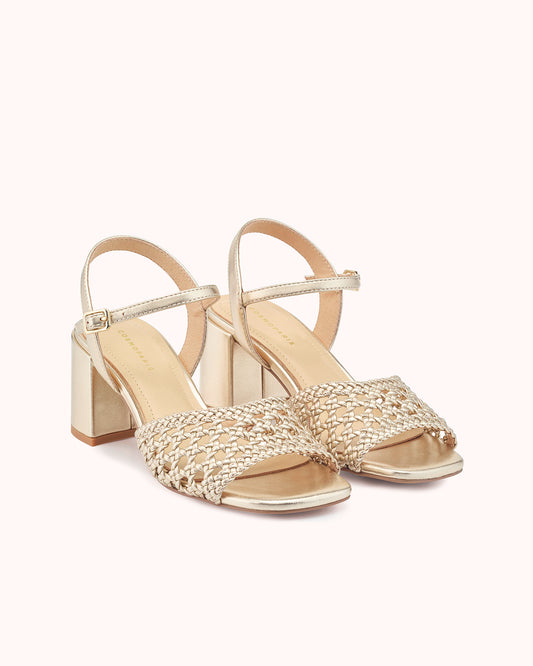
Our general recommendation: a block or wide heel of moderate height. It lasts the whole day, doesn't sink into the grass and stays stable on a reception hall's parquet floor. A very high slim heel is a lovely idea in a photo and a source of regret at eleven o'clock at night.
Colour: ivory, nude or metallic
Ivory or white honours tradition and matches the dress perfectly. A word of caution: not all whites are the same, and an optical white can clash with an ivory dress. Always compare in natural light.
Nude is the most flattering choice: it visually extends the leg and disappears under the dress, which lengthens the silhouette in photos. It is also the easiest to wear again after the wedding.
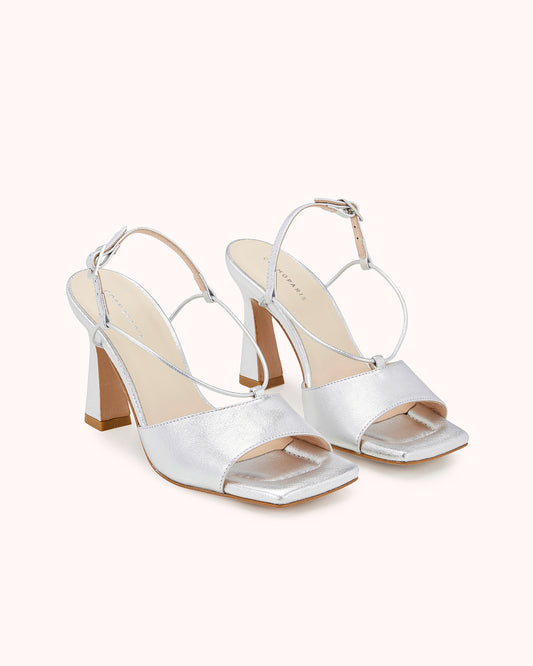
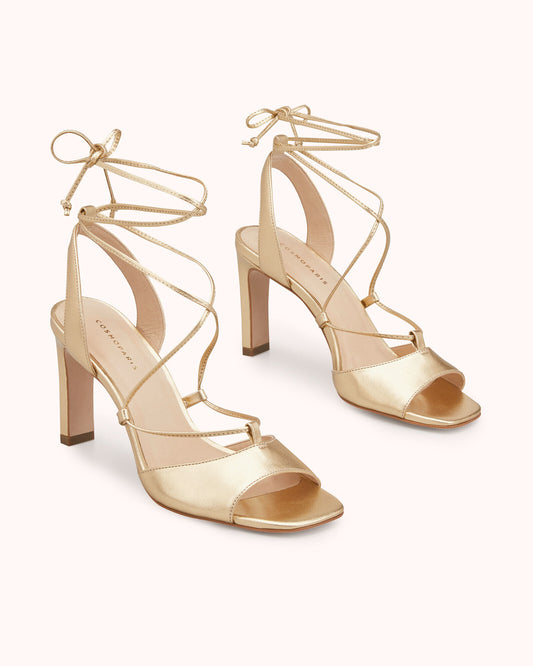
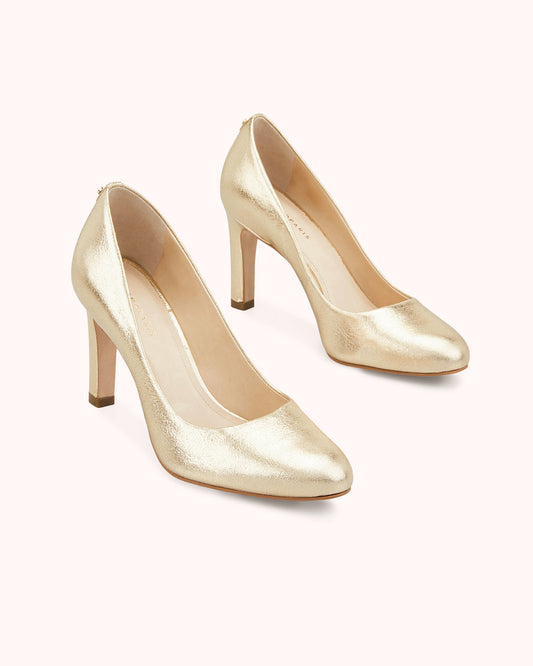
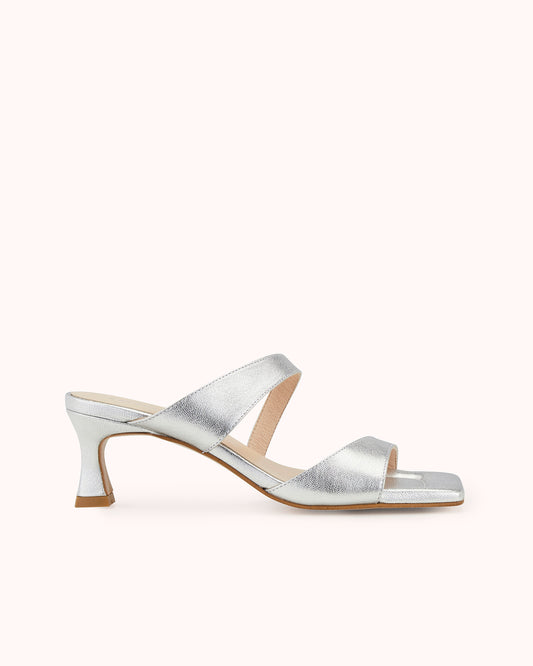
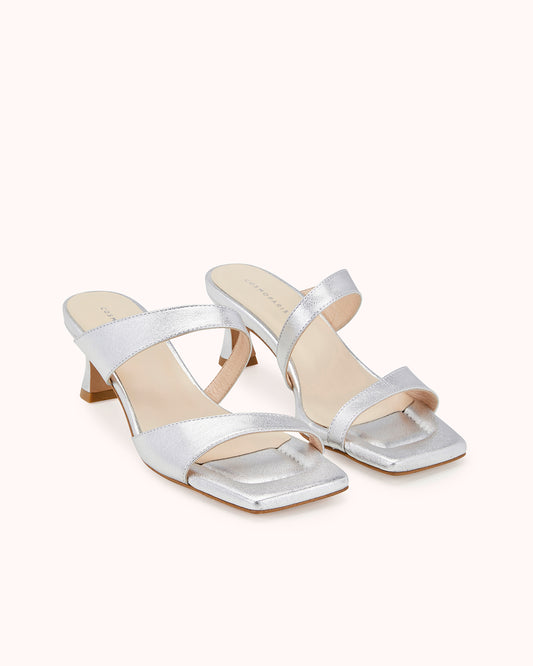
Metallic (platinum, gold, silver) brings light without imposing a colour. It works particularly well for an evening and can be worn again for other ceremonies. See our gold pumps and our gold and silver selection.
An outdoor wedding
This is the scenario that causes the most problems, and it is solved before you buy.
On a lawn, a slim heel sinks in with every step: you need a block or wide heel, or a wedge, whose solid sole spreads your weight. On gravel, an ankle strap becomes essential to avoid missteps. On sand, only a wedge or a flat style remains practical.
Think about the weather too: on damp grass, a new leather sole is very slippery. A non-slip sole protector fitted by a cobbler before the big day is an inexpensive precaution.
Plan a second pair
This is the most useful and most often overlooked piece of advice. A wedding day easily means ten to twelve hours of wear: ceremony, photos, drinks reception, dinner, dancing.
Plan a flat second pair: ballet flats, mules or flat sandals, to change into at dinner or when the dancing begins. Under a long dress, no one will see the difference, and you will actually dance.
Finally, break in your main pair: wear it two or three times at home for short periods, on a rug so as not to mark the sole. The leather lining will mould to your foot before the big day.
Frequently asked questions
What heel height should I choose for my bridal shoes?
A block or wide heel of moderate height: it lasts the whole day, doesn't sink into the grass and stays stable on a parquet floor. If you are wearing a long dress, decide on the height before alterations and bring your final shoes to your fittings.
What colour shoes should I wear for a wedding?
Ivory for tradition, making sure to compare whites in natural light. Nude to lengthen the leg and to wear again. Metallic to bring light without imposing a colour.
Should I plan a second pair for the evening?
It is highly recommended. A wedding day means ten to twelve hours of wear. A flat second pair to change into at dinner or when the dancing begins goes unnoticed under a long dress.
How do I break in my wedding shoes?
Wear them two or three times at home for short periods, on a rug so as not to mark the sole. The leather lining will mould to your foot before the big day.